

Living Through the Cultural Shift of AI
As a young professional, I find it striking to realize that AI will likely be part of my working life throughout my entire career. That thought stayed with me especially strongly at Hannes Snellman’s Legal Tech Glögit on 21 May 2026, where the theme of the evening was cultural shift in the age of AI. What the discussions made especially clear was that this transformation is no longer only technical. It is also cultural: it is changing the way people work, what organisations value, and what role humans will continue to play in working life.

For me, the topic also felt personal. AI began to gain momentum when I was in upper secondary school, and the scale of change since then has been remarkable. That is why it was especially interesting to hear experienced professionals reflect on how they believe AI may transform fields of work that have, until now, remained mostly untouched by it.
As Jesper Nevalainen, Partner at Hannes Snellman, pointed out, the shift brought by AI is no longer only technical. Three years ago, that may have been the assumption, but now the change is clearly cultural as well. Now, in 2026 we understand it is also deeply human, and we ask ourselves the question “Who do we want to be?” not only “What can AI do?” As AI becomes part of everyday life and work, people and organizations must rethink not only what they do, but how they do it, what they value, and what kind of roles humans should play in an increasingly automated world. After the event I spoke with my close friend Laura Kangas, who also attended the event, and she told me she was particularly struck by Jesper’s observation of how much our thinking around AI has changed in just a few years. She said, “What Jesper said really shows us that AI is no longer viewed as a separate tool, but as something that is becoming embedded in everyday life and work, and I find that really interesting.”
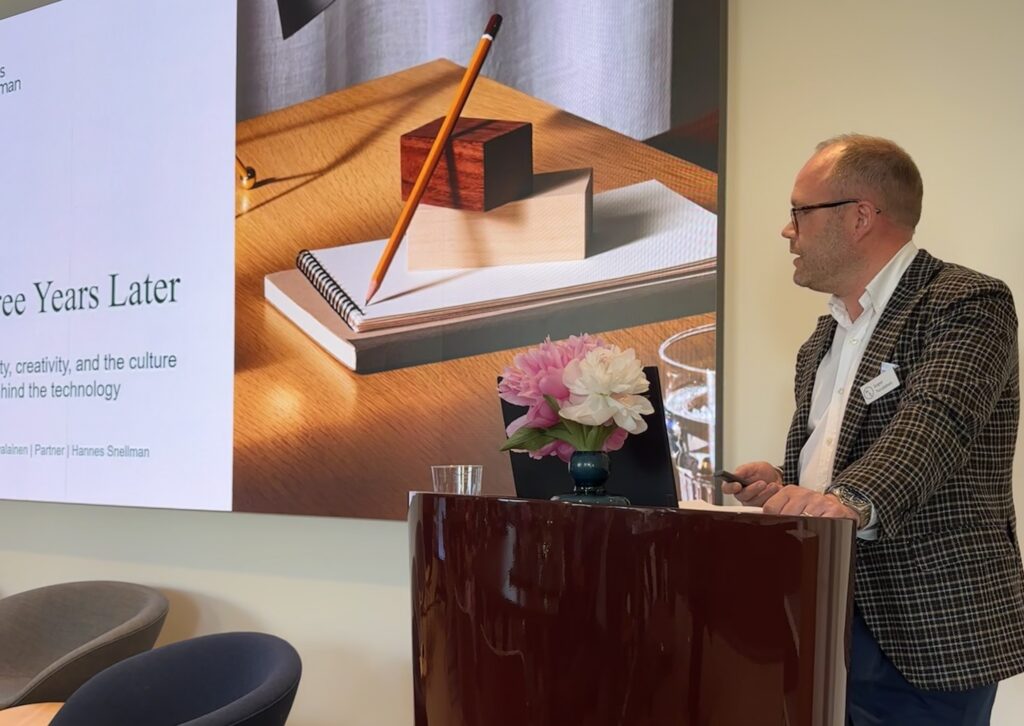
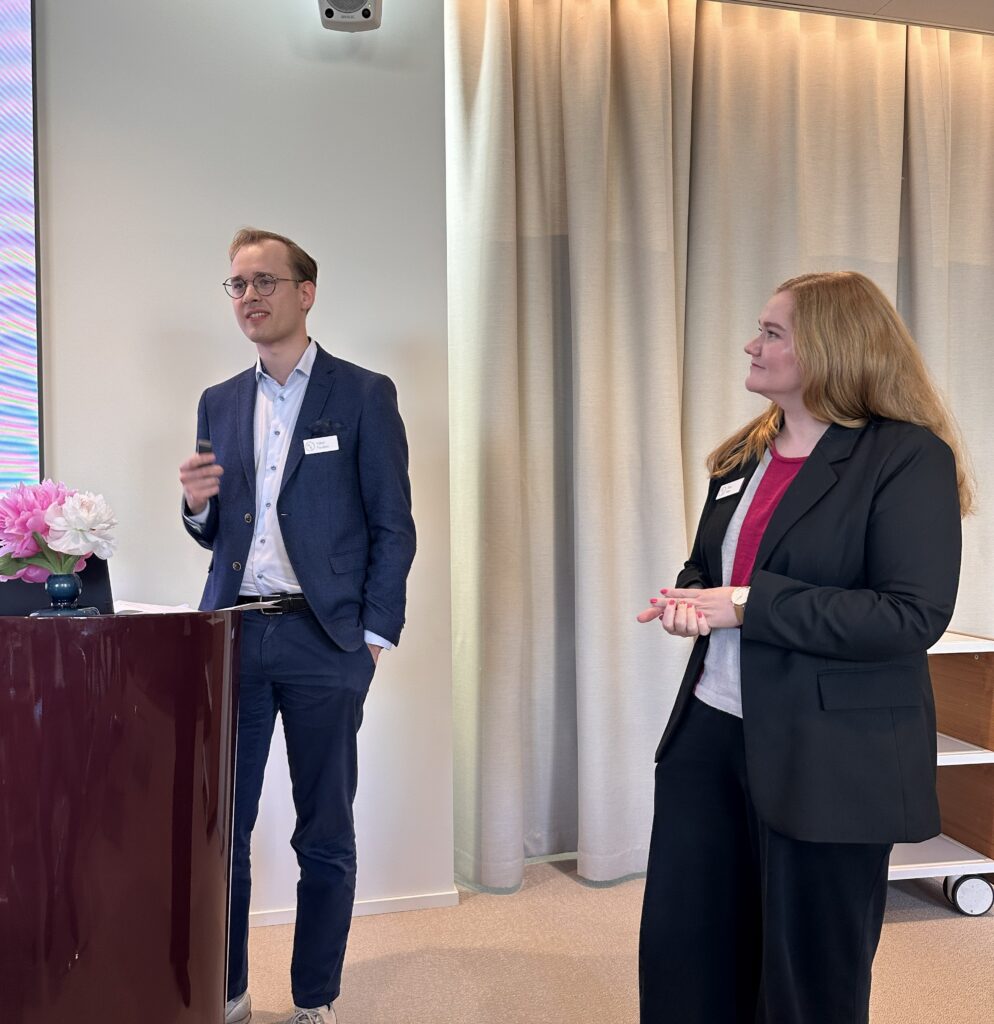
That idea stayed with me throughout the evening. If AI is becoming embedded in everyday life rather than remaining a separate tool, then the question is no longer only what it can do, but what kinds of human knowledge and organisational culture still matter around it. One of the points raised by Kira Sjöberg, one of the evening’s speakers, particularly resonated with me. It is also a perspective I return to when trying to maintain a balanced and positive view of AI, rather than getting carried away by fears that it might one day reduce the need for human work in many fields. She spoke about legal professionals carrying crucial “dark matter” knowledge that AI cannot fully see or replace, and about the fact that AI is only as effective as the human and organisational context around it. I think part of what makes AI such a widely discussed topic is that it can feel both powerful and difficult to fully grasp. People are looking for clarity and for ways to make sense of the change. For that reason, Kira’s point brought a sense of reassurance not only to me, but, I believe, to many others in the room as well.
From there, the discussion naturally widened into the value of human interaction itself. One particularly interesting aspect of this shift, I think, is that as AI becomes more integrated into everyday life and work, people may begin to value human contact even more than before. The discussion between Valter Pasanen, Legal AI Analyst at Hannes Snellman, and Taija Niku, Legal Tech Manager at Hannes Snellman, deepened this thought for me. The more automated things become, the rarer human contact can feel, and often what becomes rare can start to feel more valuable. We are human after all, and we all need human contact. In that sense I believe the rise of AI won’t reduce the importance of human interaction but actually highlight it.
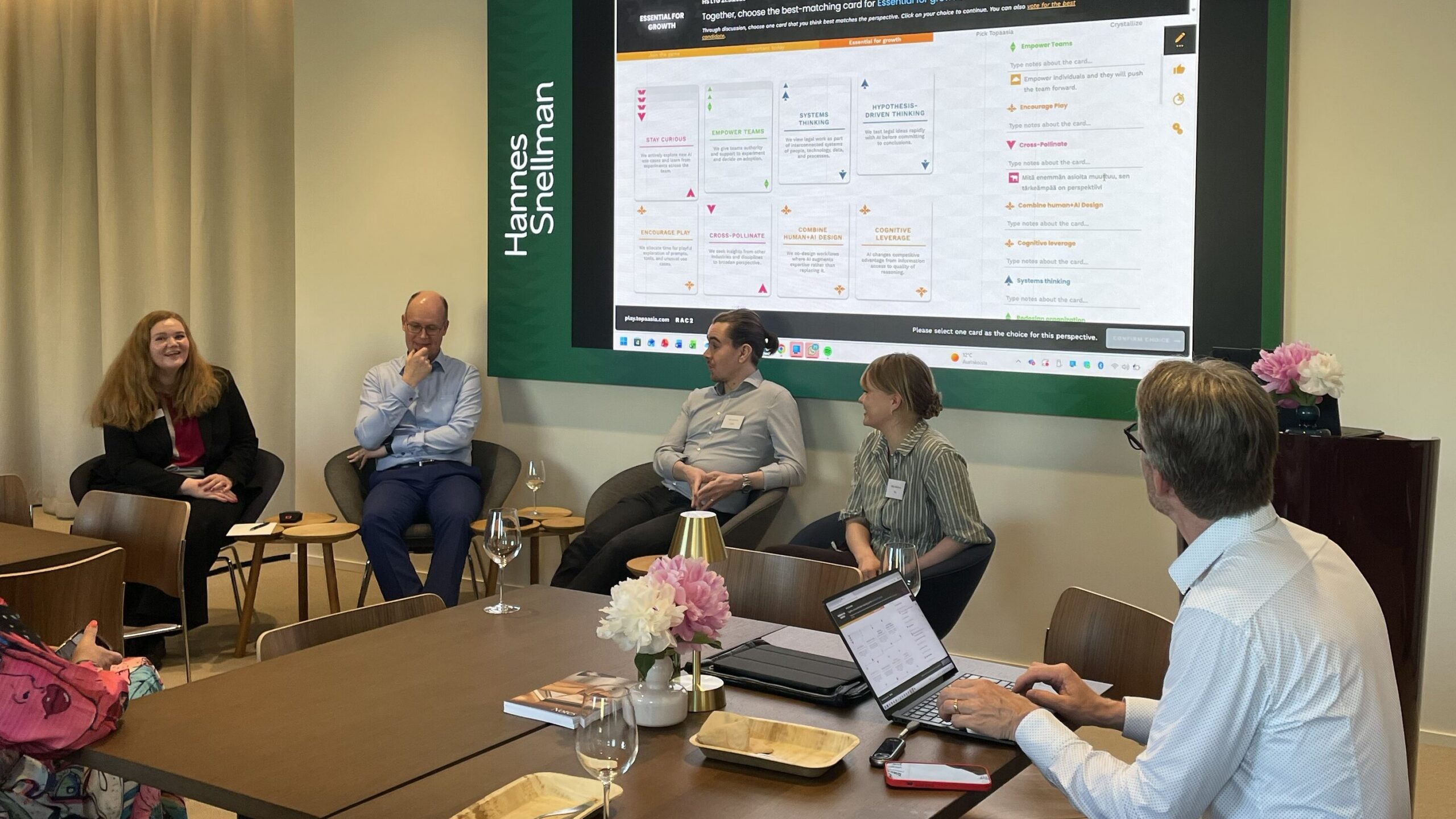
While many of the evening’s themes were serious, the final part of the programme offered a refreshing reminder that culture is also built through curiosity, playfulness, and shared reflection. The highlight of the evening for me was cultural anthropologist Juha Ruuska’s presentation on cultural anthropology, as well as the fishbowl discussions that followed. Juha spoke about a playful attitude as a fundamental human need and an important building block of culture. Learning about the research behind playfulness and the impact it can have on culture felt both insightful and surprisingly relevant. Personally, it also made me think about how valuable playfulness can be in Finland, where many people struggle with the long, dark seasons. The fishbowl discussion that followed — an open conversational format in which three volunteers from the audience joined the discussion circle — brought Juha’s presentation to life. The participants were Aku Sorainen, Senior Partner at Sorainen, Milja Makkonen, Co-Founder and CEO of Blanks, and Riku Siivonen, a contract lawyer. During the discussion, the crowd played a reflective conversation game called Topaasia, which helped surface different perspectives in a playful way and sparked reflection not only among the participants of the fishbowl discussion, but also among the audience. What stayed with me most was how valuable it felt simply to listen to people with different kinds of experience and to share the same space with them.
What stayed with me most after the evening was the realization that I am not only witnessing this cultural shift but also living through it myself. Being in a room where these questions were being discussed felt meaningful in a way that I believe I will remember for a long time. It feels like the kind of moment I may one day look back on, when AI has evolved into something far more embedded in our lives than it is today. That is why evenings like this matter. They create space not only to discuss what AI can do, but also to reflect on what kind of culture, working life, and human relationships we want to build around it. And perhaps that is the most important part of all, making sure that as AI continues to develop, we do not lose sight of the human side of change.
These are conversations worth continuing. To stay in the loop on future events and reflections, subscribe to the Legal Transformation Network newsletter.
